


I’ve been in this business long enough to see both sides of the event equation. The load-ins, the lighting cues, the post-event recaps and events where the numbers looked great but the room felt flat.
The truth is in live experiences, you’re not just selling tickets or filling seats. You’re selling emotion, and that emotion drives the real ROI.
The results brands chase engagement, loyalty, and advocacy come from feeling not logic.
ROI vs. ROE: The missing metric
Typically events are measured with the all familiar KPIs: attendance, leads, sponsorships. Yes, those still matter. But the best marketers are looking past the spreadsheet. They are measuring Return on Emotion, or ROE.
Research backs it up. Harvard Business Review found that emotionally connected customers are 52% more valuable than highly satisfied ones. Capgemini discovered that 70% of emotionally engaged consumers spend twice as much with the brands they love. And PCMA’s Future of Events Report found that 87% of event leaders believe emotional resonance is the top driver of long-term brand impact.
Emotion is not the fluff, it is not the “nice part” of the event. It is the engine that converts your audience to act and keep them coming back.
What this means for brand marketers
If you’re leading live experiences, your job isn’t just to inform. It is to move people and make them take action!
When someone leans in during a panel, stays late to network, or pulls out their phone to capture the moment that is emotional design at work. You created something they felt.
When I design and experiences I do this on purpose. Here’s how.
1. Define the feeling first
Before we talk vendors, creative, or budget, we start with one question: What do we want people to feel and do when they leave?
Inspired? Connected? Advocate?
Once that goal is identified, every production choice from lighting to programming gets easier.
For example, a tech client of ours wanted guests to leave feeling empowered. So instead of product demos, we opened with short, fast stories from peers who had done the work. Then gave attendees a chance to make something themselves.
The takeaway wasn’t “cool event.” It was “I can do this”, that is ROE.
2. Design around peaks and endings
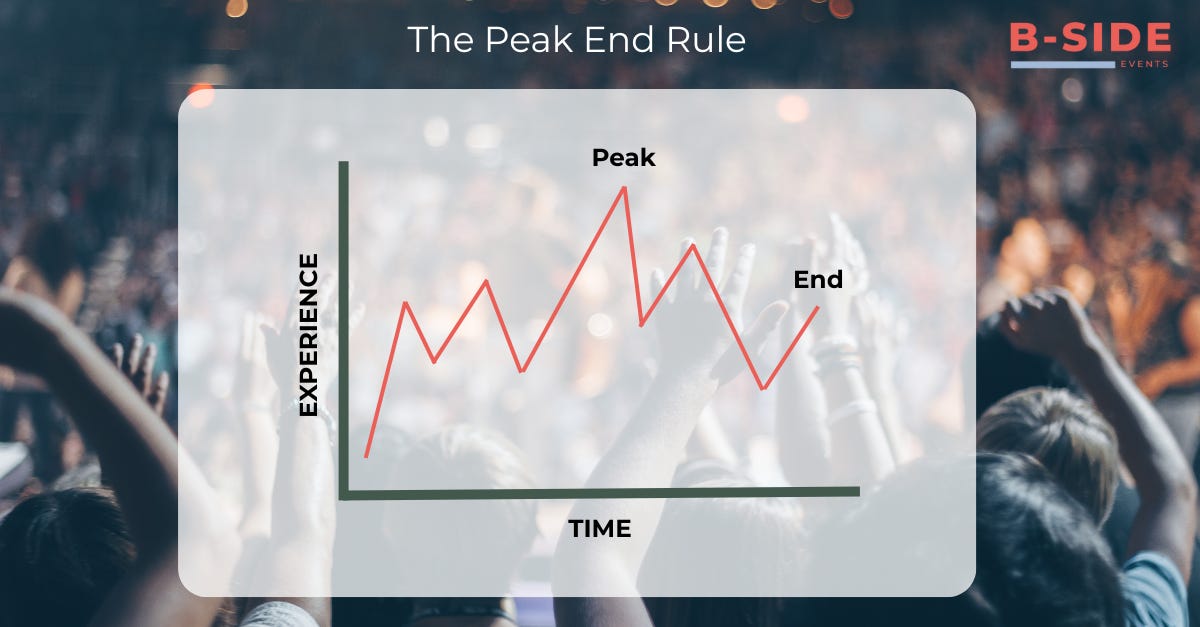
Psychologists Barbara Fredrickson and Daniel Kahneman proved something every good producer knows, people don’t remember everything. But they do remember two things, the peak moment and how it ends.
That’s the “peak-end rule.”
So when we build a show flow, we plan intentionally around both. A high-energy, emotional middle that draws people in. Then a closing moment that lands with the purpose of leaving them connected to the brand.
3. Measure what matters
Every brand marketer wants metrics, and they should. But now it is time to widen the lens! Yes, you still should track attendance, dwell time, engagement, and conversions. But pair it with the what people felt. Look at post-event surveys for emotional language, track sentiment in social comments, use both tools and observation to see if you hit on that emotion.
PCMA reports that 55% of event planners struggle to measure emotion, but almost all or 92% agree it’s critical to proving event ROI.
Why emotion matters right now
All the digital noise has numbed people, scroll, swipe, and forget. But live experiences they cut through the noise. They’re physical, felt and remembered. When you create a moment that moves people emotionally, you get something no algorithm can replicate advocacy.
This turns guests into evangelists and brands into communities.
If you’re planning an event next quarter
Use the peak-end rule, start simple, choose one emotion you want your audience to feel and design around it. Map out your guest journey and find your peak, the moment where energy and connection spike. Then script your closing five minutes like the opening of a film. Those are the parts that stay with them.
After the event, don’t stop at just logging the KPI’s on a spreadsheet. Collect stories, listen for the “I felt…” and “I left thinking…” comments. Those are your real metrics of impact.
And when you report results, pair the hard data with the emotional takeaways. The combination ROI + ROE is what earns credibility and unlocks future investment.
Use This: 5 Ways to Get an Emotional Reaction
Set tone early. Music, lighting, and greeting energy shape emotion before a single word is spoken.
Tell a real story. Data convinces. Stories connect. Lead with human moments that reflect your audience’s world.
Design for participation. When guests do something; build, vote, move they feel something.
Surprise them once. A single, unexpected moment (a reveal, a sound shift, a shared toast) burns into memory.
End with meaning. Tie the final moment back to the emotion you wanted all along. Leave them with a feeling, not a fact.