


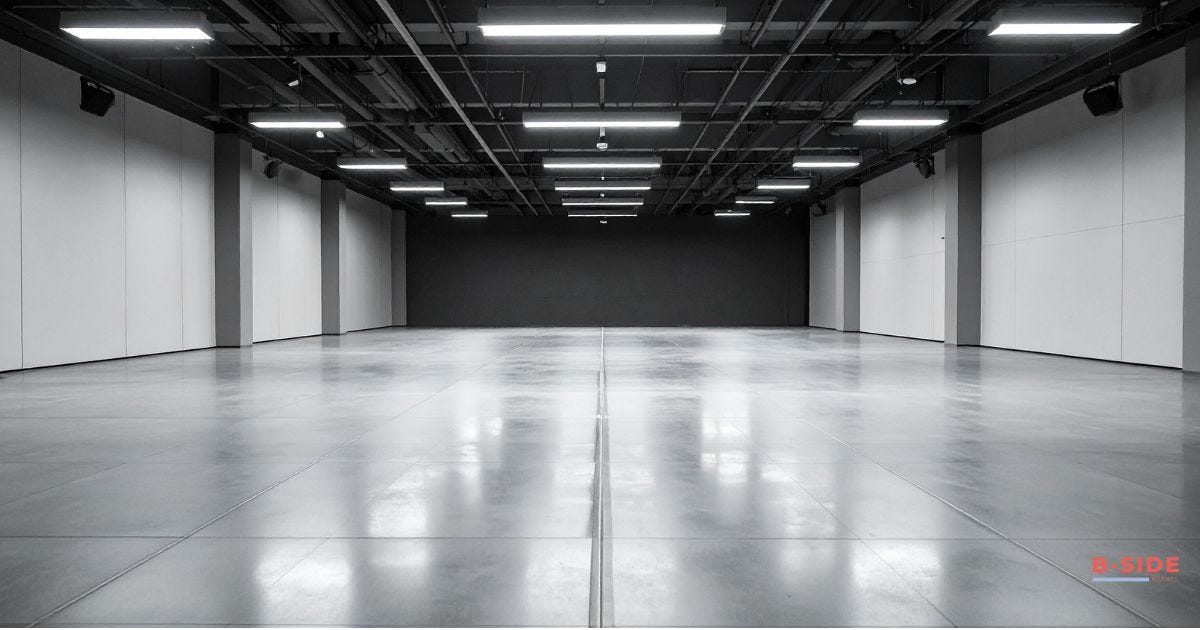
There’s a moment in every project where the client says the same thing. “Can we add one more thing?” A new activation, another sponsor element, a second stage, a bigger footprint, more lights, more screens, more everything.
Adding is easy. Cutting is the real work.
Simplicity isn’t minimalism it is not boring or “doing less.” It is the discipline of choosing the right things and removing everything else that gets in the way.
And that’s the part almost nobody wants to talk about.
Strategy: Why simplicity is so hard
Events are emotional everyone wants their moment. That is how you end up with the Frankenstein agenda we’ve all seen:
A run of show that tries to serve twelve priorities.
A floor plan with five competing focal points.
A sponsor list that looks like Times Square.
A program that runs thirty minutes too long.
The audience, story and energy all get lost. Simplicity forces you to make choices and to select what actually matters. Most teams avoid that moment, great producers run straight at it.
Story: What this looks like in the real world
I have lived this a hundred times, a city wants a community festival to feel “bigger.” brands wants to “activate more touchpoints”, a nonprofit wants the program to “honor everyone.”
But when you zoom out, the event starts to bend under its own weight. There are always more good ideas than what you can actually execute well. Remove the noise, and let the experience actually breathed. Cutting things don’t make it smaller it makes it sharper.
Showtime: How to design with simplicity in mind
If everything is important, nothing is. So here’s the filter I use on every project:
Does this idea support the core moment?
If not, it’s gone.Does this element make the audience feel something?
If it doesn’t, it’s noise.Does removing it make the event clearer?
If yes, cut it without hesitation.Does adding it create friction?
Extra staff? Extra lines? Extra setup time? Probably not worth it.
One of the best parts, simplicity travels, it scales, it makes events easier to produce, easier to attend, and easier to remember.
Anyone can stack more stuff onto a floor plan, It takes a pro to strip it down.
Final Thought
Events aren’t built by what you add, they are defined by what you protect. Most of the time, the thing worth protecting is the simplest idea in the room.
Use this
1. Start with the feeling, not the features.
If the element doesn’t push the emotional experience forward, it’s probably clutter.
2. Pick one focal point per space.
Stages, activations, décor one hero per zone. Everything else supports the hero or gets cut.
3. Protect your run of show at all costs.
If a program goes long, you lose attention. And once you lose attention, you lose the room.
4. Look for friction before you look for fun.
Anything that adds confusion, slows movement, or increases staff load is already too expensive.
5. Ask the simplest question: “Will anyone miss this?”
If the answer is no, remove it. Ninety percent of the time, the event gets better instantly.